 Resources

 Written By: Summer Clarkson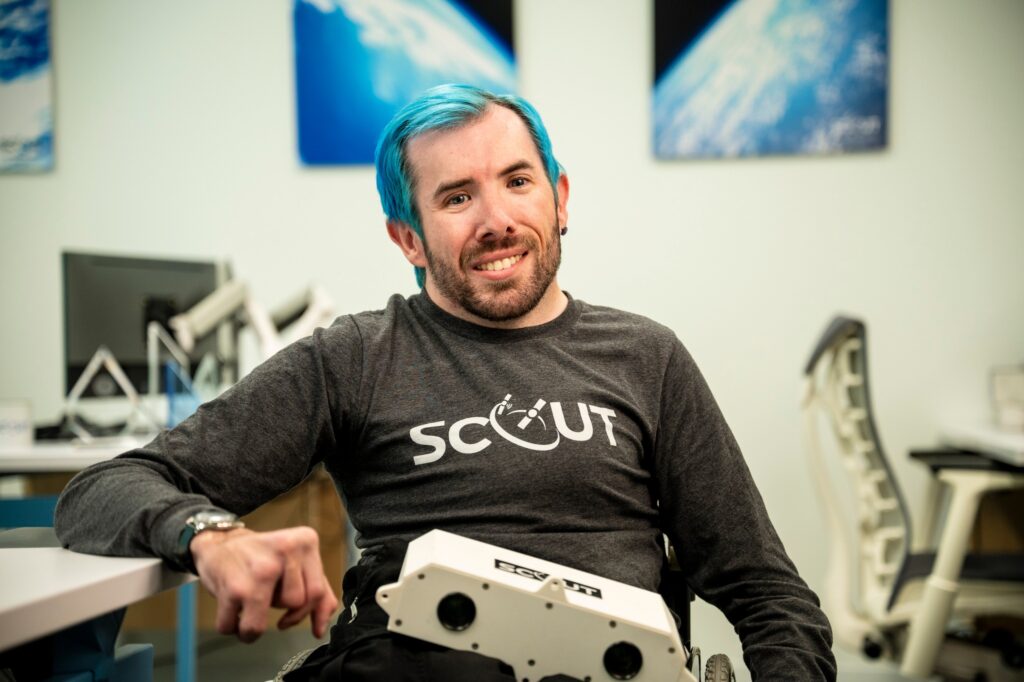
“Space Is for Everyone: Eric Ingram (Old Dominion ’08) on Accessibility and Pursuing Dreams” was featured in the spring 2026 edition of The Emerald. To read the entire edition, visit here.
Will Marsh (Pennington & Company), contributing writer
Eric Ingram (Old Dominion ’08) never sought to be an “advocate,” and he only recently accepted the term. But from his experiences living as a disabled person, the Scout Space founder has always encountered and overcome roadblocks in both his life and career. As his work in the space industry grew, Ingram became a voice for accessibility almost of necessity – not just accessibility in everyday life, but also for the future of space travel.
“I like to joke that it’s out of selfish reasons, because I want to go to space and need to make sure spacecraft and launch vehicles are accessible,” he said. “But even if I never get to go, it’s for whoever needs it. I don’t want anyone to be left out of something because of their disability.”
Feeling At Home
One place where Ingram didn’t feel left out was Sigma Pi. His older brother was a Theta-Eta member, so Ingram was already tied into the Sigma Pi network and quickly made friends as he joined. While none of the Old Dominion houses were wheelchair accessible at the time, brothers and event hosts were always there to help him with stairs.
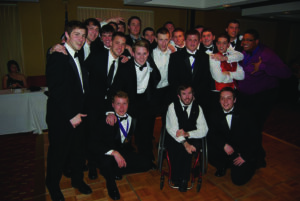 “My disability was never something that brothers singled out or treated as detrimental, and everybody was very accommodating.” By getting to know the brothers and holding leadership roles, Ingram gained more confidence in his voice in social and professional settings. “Being a physics major was super stressful, and coming home to brothers with diverse backgrounds and life experiences was often a relief.”
New Horizons
With a lifelong passion for space, Ingram was determined to work in that industry. He focused his studies as close to space research as possible – first through AP classes, next at ODU, and then in grad school at the University of Houston. He also started networking with the industry by attending conferences and attending student groups such as Students for the Exploration and Development of Space (SEDS). While at Old Dominion, he started a SEDS chapter that grew to about 75 members by the time he graduated. “All of that helped me get into the ecosystem before I even had a job.”
Ingram’s professional journey brought him to the FAA’s Office of Commercial Space Transportation, where he worked in licensing and regulating of the launch and reentry industry. Living in D.C., he founded Scout Space, which develops technology for safe and sustainable space operations. Ingram is currently a volunteer on the leadership team for AstroAccess, which promotes disability inclusion in human space exploration and in STEM.
“AstroAccess has done lots of research on accessibility for spacecraft, including mobility impairment and microgravity research that nobody has done before,” Ingram said. “I’m a small part of that team, but it’s been a rewarding experience that I hope opens lots of doors for people.”
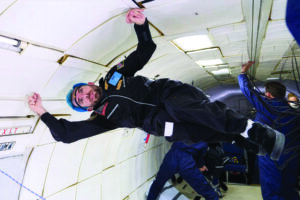
In addition to mobility-related research, AstroAccess studies accessibility across many disability categories, including blindness and deafness. The organization now also conducts hypergravity research, using centrifuges to test designs, best practices, and changes that improve accessibility during the launch phase of space travel. In fact, December 2025 marked a major milestone for the work. The first wheelchair user, who is also an AstroAccess member, flew to space aboard the Blue Origin New Shepard capsule alongside five other crew members. The flight demonstrated how accessibility research translates into real missions. Ingram spoke about the launch and its significance in an interview with ABC News.
 The Future (and Present) of Space
Eventually, Ingram believes that unless humanity becomes a multi-planetary civilization, it will cease to exist. But for now, he suspects people don’t realize how important space already is in our everyday lives.
“It’s much more than rocket launches and NASA programs,” he said. “You, as a person in the 21st century, are probably interacting with space a dozen times just by picking up your phone. If you use a GPS, use Starlink internet, or make financial trades, you are using space technology. They’re doing biomedical research at the International Space Station – research we can only do in space – that may cure cancer one day.”
A major goal of Ingram’s work is to increase understanding and appreciation of everything space does for society. Should the general public lose interest, that can risk funding for programs that have major benefits.
Assuming that doesn’t happen, Ingram predicts a rise in commercial space travel and space stations within the next 10 years. Transportation from New York to Tokyo, in theory, could be as brief as an hour and a half. (“It’ll probably start out expensive for the average person, but if you follow the history of aviation, prices will go down over time.”) A rise in space stations will also increase research that can only be done in the microgravity of space, as researchers currently do on the ISS.
Better for Everyone
As for accessibility, Ingram sees a unique opportunity that doesn’t exist on Earth. Modern accessibility standards (such as ramps and elevators) are often retrofitted into older construction fundamentals and ideals that have existed thousands of years. Human space travel, by comparison, is just getting started, opening the door for more inclusive infrastructure.
“I’ve joked in some panels that if humanity decided ramps were cooler than stairs 5,000 years ago, my life would be a lot easier,” he said. But as we design space ecosystems (both for spacecraft and other planetary bodies), what if we implement universal, barrier-free designs from the get-go? You don’t have to retrofit and deal with the added cost of updating existing structures – you can do it from the beginning, and that becomes the standard. We’re just getting started in space, which offers a lot more flexibility.”
As Ingram sees it, accessibility done right is useful for everyone. Automatic doors at the grocery store and curb cuts on the sidewalk are major examples that have virtually become standard. When it comes to the remaining hurdles, Ingram hopes leaders will see an opportunity instead of a burden. “At least 15 percent of society has a disability, and if you were a business owner, how would you feel about automatically excluding 15 percent of your customer base?”
Ingram is on the board of directors for 2Gether-International, which connects disabled entrepreneurs with resources for their startups. Through that and his own personal experience, he’s found that people with disabilities, who constantly rely on creative thinking, make excellent entrepreneurs.
“I typically encounter more hurdles and burdens just to get out the door in the morning than the average person experiences in a day,” he said. “People with disabilities aren’t easily deterred by hitting a wall (metaphorically), which makes them uniquely qualified to manage the emotional burden of entrepreneurship. It’s hard work, and most days are bad – but eventually, you get past them and get to the good stuff.”
The Good Stuff
Today, Ingram stays in touch with various Theta-Eta brothers, having shared a fantasy football league for about 14 years. Transitioning from Scout Space leadership to an advisory role has afforded him more free time than in the past, and he continues to work as a speaker and consultant in the fields of space, accessibility, and entrepreneurship. He also enjoys playing wheelchair rugby and looks forward to more time flying the plane he bought over a year ago.
“Just go out and have fun, and don’t be overly burdened by the day-to-day nuances of life,” Ingram encourages. “Try stuff, whether you fail or succeed, and keep moving forward.”
To learn more about Ingram’s life and pursuits, visit ericingram.net.