 Resources

 Written By: Summer Clarkson
If you know a volunteer, undergraduate, or would like to nominate your chapter to be recognized in the Quarterly, fill out this simple form. The volunteer recognition is not limited to Chapter Advisors and Province Archons, and the undergraduate recognition is not limited to Sages.
Chapter of the Quarter
How One Chapter Stopped “Trying Harder” and Started Recruiting Smarter
Rachel Stringer (Pennington & Company), contributing writer
After two difficult recruitment years, the brothers of Beta-Kappa Chapter at Arizona State University knew something had to change. Effort was never the issue. Members showed up, events took place, and outreach occurred, but the results no longer matched the Chapter’s ambitions. Rather than doubling down on the same approach, Beta-Kappa’s leadership chose a more difficult but ultimately more effective path: rethink the process from the ground up.
That decision led to one of the Chapter’s most successful recruitment cycles in recent memory.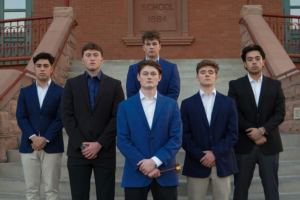
Through cultural alignment, structural clarity, and relentless consistency, Beta-Kappa rebuilt momentum in 2025. Read on as former Chapter President Dayton McCann (Arizona State ’23), along with Recruitment Chairmen Nico Esser (Arizona State ’24) and Tanner Olson (Arizona State ’24), share how the Chapter identified its challenges, implemented change, and developed lessons other chapters can apply immediately.
Recognizing the Problem
For McCann, the turning point came from examining the Chapter’s identity and long-term health. He concluded that recruitment was not just about numbers, but about maintaining the level of involvement and leadership the Chapter required. “This Chapter thrives when it has a large number of undergraduates,” McCann said.
Recruitment numbers, he explained, were never just about optics. They directly influenced energy, culture, and sustainability. Asking members to simply work harder without adjusting strategy was not going to change outcomes. What the Chapter needed was a reset grounded in intention rather than habit.
Rallying Behind a Clear Cause
Once leadership acknowledged the problem, alignment became the priority. McCann focused on keeping expectations clear and the message consistent. “The key was focusing fully on what needed to be done and walking through the steps we needed to take to accomplish our goals,” he said. “Getting everyone on board to hit those numbers was crucial.”
The directive itself was straightforward. “Work extremely hard, get results, and don’t stop until we get there.” That clarity, however, was paired with perspective. Leadership spent time discussing how a large new member class could strengthen the culture and accelerate progress toward rebuilding the Chapter.
Accountability followed the same mindset. Rather than relying on complex tracking systems, the Chapter emphasized individual responsibility. “It was a simple discussion of lining up the executive council’s goals with the members of the Chapter,” McCann explained.
With guidance from Vice President of Client Success Jake Reed (Arkansas ’19), expectations became even more concrete: every member should aim to be the source of at least one recruit. “We knew that if we could each individually focus on adding one brother to the roster,” McCann said, “then we could have a great shot at doing something truly special this time around.”
Shifting Culture to Produce Results
Recruitment success began with behavior, not bid cards. McCann emphasized that the Chapter needed to adopt a more disciplined and intentional approach before expecting different outcomes. “Recruitment was structured differently this time around,” he said, citing changes in marketing, planning, and a shift from “relaxed to buttoned up.”
That adjustment required consistency across the Chapter. Events became more purposeful, member engagement increased, and potential new members (PNMs) encountered a unified presence rather than uneven enthusiasm. The cultural shift created the foundation necessary for structural improvements to take hold.
Rebuilding the Recruitment Machine
For Recruitment Chairmen Esser and Olson, progress started with an honest evaluation of prior recruitment cycles. “We recognized that overall chapter engagement during recruitment needed to be more consistent,” Olson said. “When engagement fluctuated, it impacted the energy and continuity of events for potential new members.”
Esser pointed to another recurring issue: disconnects within the process itself. “Outreach and events weren’t always aligned, and roles weren’t clearly defined,” he said. Without clarity, accountability suffered, and momentum stalled.
To address that, the recruitment team restructured responsibilities. “We approached recruitment with a more structured plan by clearly defining roles,” Olson explained. He focused on organizing and executing events, while Esser handled outreach and ongoing communication with potential new members. “By splitting outreach and events, we created a smoother transition from first contact to continued involvement.” That division transformed recruitment from a reactive scramble into a coordinated system. Each stage supported the next, giving potential new members a consistent and intentional experience.
Keeping the Human Element
To support the new recruitment structure, the Chapter introduced data-driven tools designed to create clarity and consistency without sacrificing personal connection. “We used a Google Form to evaluate interest from PNMs,” Esser said. “That gave us a clear list of who to follow up with.” Tracking outreach and event attendance helped the recruitment team stay organized, identify trends, and adjust their approach in real time, ensuring no potential new member was overlooked.
Leadership was careful to treat data as a guide rather than a replacement for genuine interaction. McCann noted that while traditional benchmarks, including social media engagement, recruitment forms, and bids, remained important, the most impactful moments were often the least measurable. “I saw some undergraduates talking to potential new members for almost an entire event, which wasn’t necessarily measurable, but when compounded, these had a huge effect on the conversion of a PNM to a signed bid card.” As a result, leadership consistently reinforced that depth of engagement, not surface-level attendance, was the true driver of recruitment success.
Restoring Confidence and Motivation
Previous challenges could have dampened morale, but Esser and Olson intentionally focused on progress instead of pressure. “We reminded members that we knew what the Chapter was capable of,” Esser said. Breaking recruitment into manageable actions (outreach, follow-ups, and showing up, etc.) helped members recognize progress as it happened.
Olson added that celebrating momentum made a difference. “Honoring small wins and highlighting positive engagement from potential new members helped build confidence and keep energy high.” As results became visible, motivation followed naturally.
The Moments They Knew
Several milestones signaled that the strategy was paying off. “One clear indicator was at our first event, a UFC fight watch party, when the house ended up overflowing with people,” Olson recalled. “Seeing that turnout showed that our outreach was connecting and generating real excitement.”
Another was the arrival of organic prospects. “Potential new members began bringing friends on their own,” Esser said. That word-of-mouth growth confirmed that outreach, events, and messaging were aligned and that the experience reflected the Chapter’s culture.
Lessons Learned
For McCann, the experience underscored a core leadership principle: people commit when they understand how a goal connects to their own reasons for being involved. “To get an entire group on board, you have to frame the goal in a way that resonates with what individuals want from the experience,” he said. While those motivations differed from member to member, the underlying purpose was the same. “At the end of the day, we all came here to build lifelong friendships and create something meaningful,” McCann said. “That shared purpose is what ultimately drove everyone to put in the work.”
Advice for Other Chapters
Esser and Olson believe the Chapter’s process is broadly applicable. “Our biggest advice is to focus on bringing the brotherhood together,” Esser said. “When potential new members see the whole Chapter united, it makes them want to be a part of it.” Strong outreach, events that reflect authentic culture, and consistent messaging, Olson added, created the energy needed to turn interest into commitment.
Making Success the Standard
With momentum restored, sustainability is now the focus. “Focusing on the habits we started, the methods that we created, and keeping everyone on the same page is the current goal,” McCann said. “We’re moving at full steam ahead to accomplish it.”
Beta-Kappa’s 2025 recruitment success was not the result of luck or a one-year rebound. It was built through alignment, structure, and shared ownership and stands as proof that when a chapter commits to intentional change, results follow.